Conditions & treatments

Cataract Surgery

Expert surgical care from an experienced cataract surgeon

The clouded lens, replaced. Fig. A
Cataracts

What is a cataract?

A cataract is a gradual clouding of the eye's natural lens, which sits just behind the pupil and focuses light onto the back of the eye. As the lens loses its clarity, vision becomes misty, colours fade and glare becomes more intrusive. Cataracts are extremely common with age — and modern surgery is one of the safest and most effective procedures in medicine.

Common symptoms

  • Blurred, misty or dimmed vision
  • Glare from headlights, lamps or low sunlight
  • Colours appearing faded or yellowed
  • Difficulty reading or driving at night
  • Frequent changes of spectacle prescription
How cataracts are treated

Cataract surgery (phacoemulsification) removes the clouded natural lens through a tiny incision and replaces it with a clear artificial lens implant, measured and chosen specifically for your eye. The procedure is typically performed as day-case surgery under local anaesthetic and usually takes 15–20 minutes.

Most patients notice clearer, brighter vision within days, with simple eye drops and a short course of follow-up to guide recovery.

Your lens options

The right lens depends on your eyes, your lifestyle and your priorities — all discussed fully before any decision.

Monofocal

A single point of focus — usually set for clear distance vision, with glasses for reading. The most widely used and dependable choice.

Toric

Corrects astigmatism at the time of surgery, sharpening vision for patients whose cornea is not perfectly curved.

Premium & EDOF

Extended-depth-of-focus and multifocal designs that reduce dependence on glasses across a range of distances.

Enhanced monovision

One eye focused for distance and one for near — a tailored strategy Mr Garg plans with you where suitable.

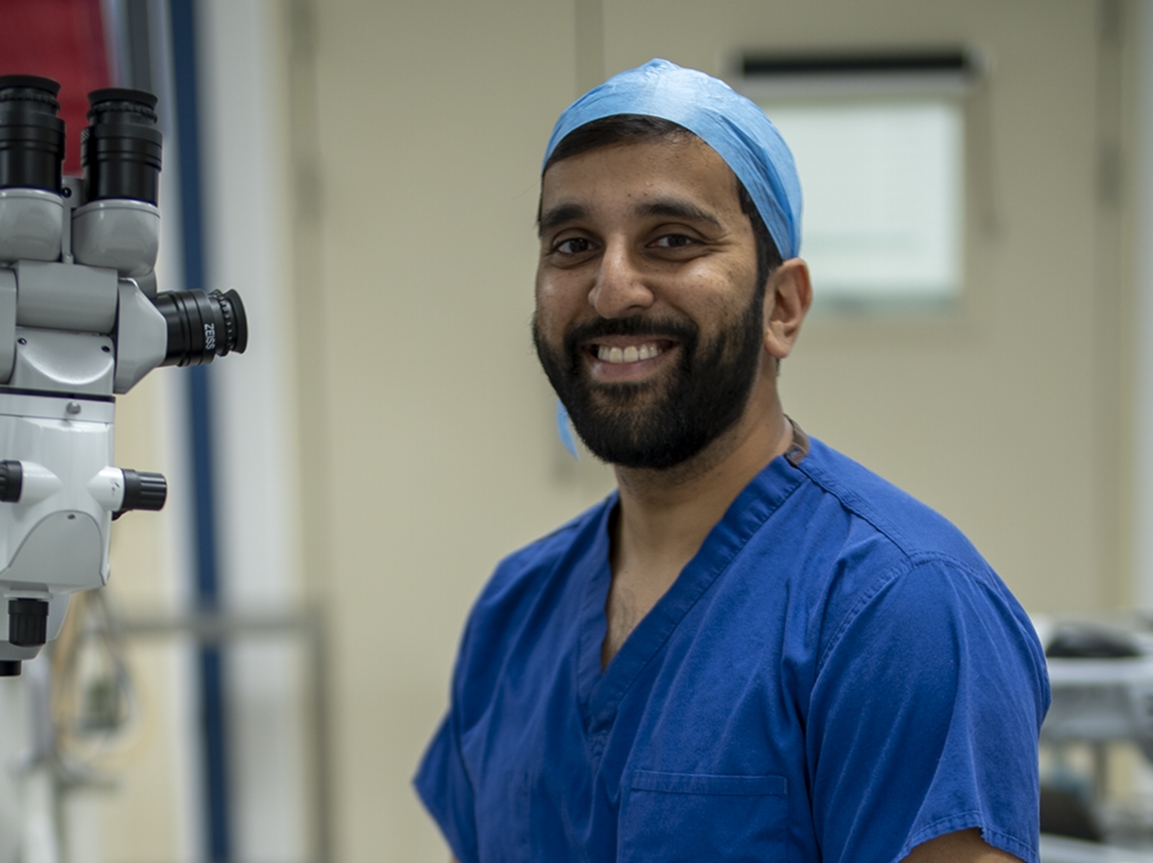
Mr Anurag Garg in surgical scrubs at the operating microscope

Mr Garg's experience

Mr Garg has performed over 1,200 phacoemulsification procedures as primary surgeon, with consistently safe surgical outcomes.

He has a specialist interest in complex cataract surgery and patients with co-existing eye conditions, and offers the full range of intraocular lens strategies — including toric and premium lenses for patients seeking freedom from glasses. His priority is ensuring every patient feels fully informed and confident before proceeding.

1,200+procedures as primary surgeon
Full rangeof intraocular lens options
Complexcases and co-existing eye conditions

What to expect

Your journey, from first visit to full recovery.

Step 01

Consultation & planning

An unhurried consultation with detailed measurements (biometry) to plan your surgery and choose the lens that suits your eye and your life.

Step 02

Day-case surgery

The procedure usually takes 15–20 minutes under local anaesthetic. You'll go home the same day with drops and clear aftercare instructions.

Step 03

Recovery & follow-up

Most patients notice clearer, brighter vision within days. Mr Garg reviews your recovery personally and remains your point of contact at every stage.

Book a consultation

Mr Garg welcomes self-referrals, GP and optometrist referrals, and patients with private health insurance.

Book a Consultation